Kidney disease treatment project headlines CoMotion Innovator Showcase
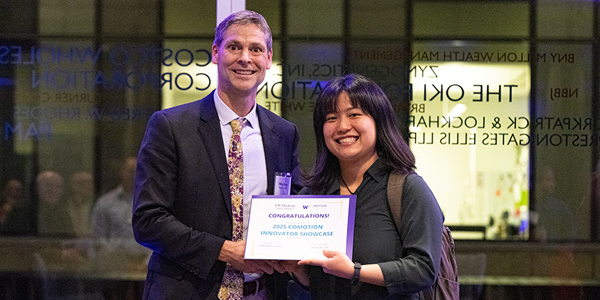
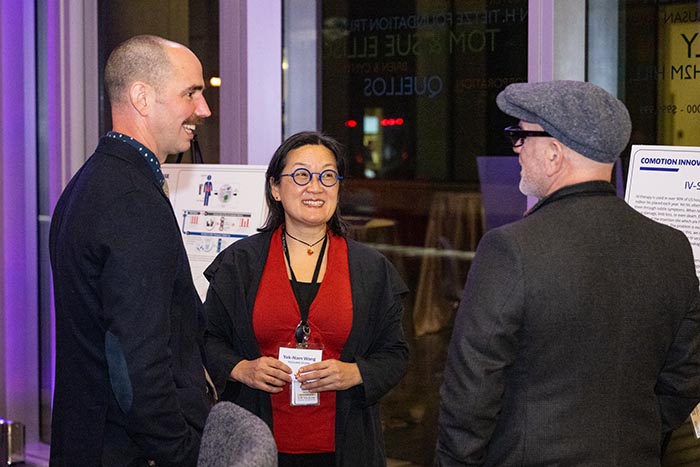
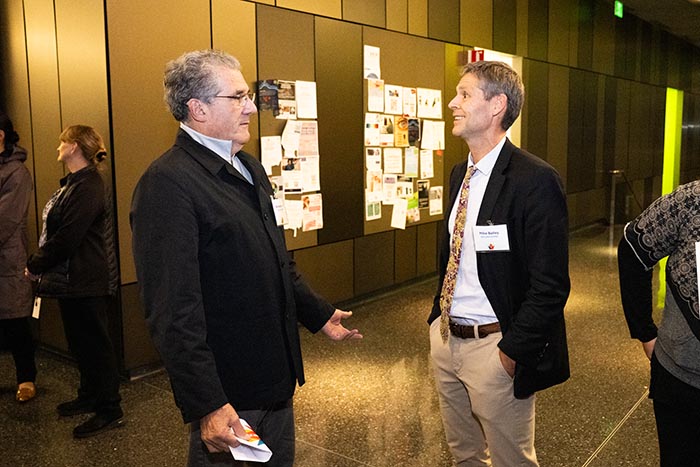
Dr. Michael Bailey with UW Civil & Environmental Engineering grad student Pei-Hsin Wang at School of Medicine, November 3, 2025. (All photos courtesy School of Medicine)
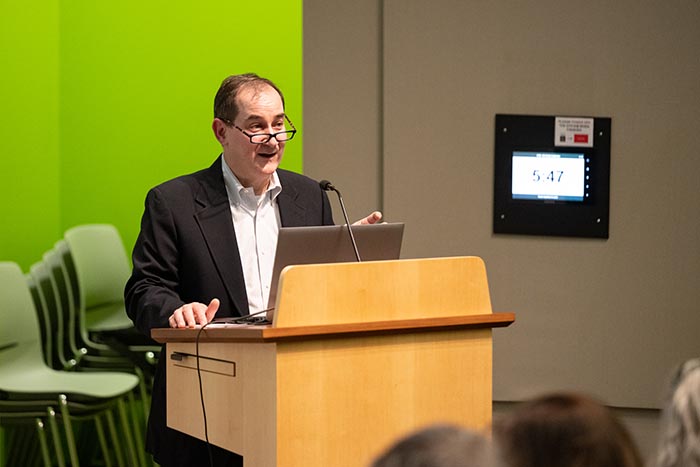
Michael Bailey and his team “The Rolling Stones” have been honored as this year’s Inventor of the Year by the University of Washington School of Medicine. Their groundbreaking work on a noninvasive, ultrasound-based method to break up and clear kidney stones—funded by the NIH and NASA—has led to new treatment possibilities that avoid surgery and may help patients before emergencies arise. The team also spun out UW startup SonoMotion to bring this technology to market, with support from CoMotion through several CoMotion Innovation Gap Funds, SBIR/STTR assistance, and other commercialization programs. Bailey is also an associate professor at UW’s Department of Mechanical Engineering. Learn more about Dr. Bailey and his team on the UW School of Medicine’s Inventor of the Year page.
CoMotion Innovator Showcase 2025
Attendees at the event also voted for their favorite project during the CoMotion Innovator Showcase, following one-minute pitches and poster sessions from five UW researchers.
TheraT – winning project uses gut-targeted approach to delay dialysis
Graduate student Pei-Hsin Wang (Civil & Environmental Engineering) took first place for TheraT, a novel therapeutic approach to improve outcomes for patients with chronic kidney disease. Inspired by the concept of “therapeutic bubble tea,” TheraT uses a gut-targeted compound to capture toxins before they enter the bloodstream—potentially reducing vascular complications and delaying or lessening the need for dialysis. Wang’s work integrates sustainable environmental engineering with low-impact solutions for long-term chronic conditions. The project was developed with UW researchers Dr. Mari Winkler and Dr. Bruce Godfrey, and is supported by an advisory board that includes Dr. Wendy Garrett, Dr. Milcah Scott, and Dr. Jonathan Himmelfarb.

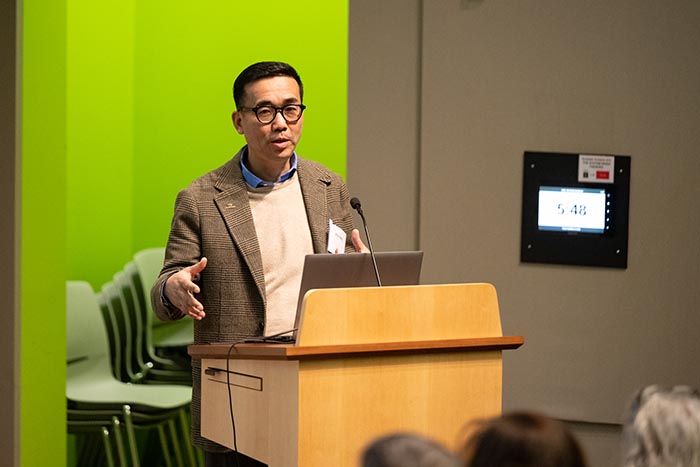
Pei-Hsin Wang pitching during the CoMotion Innovator Showcase

TheraT poster
These four impressive runner-up projects also earned recognition from the judges.
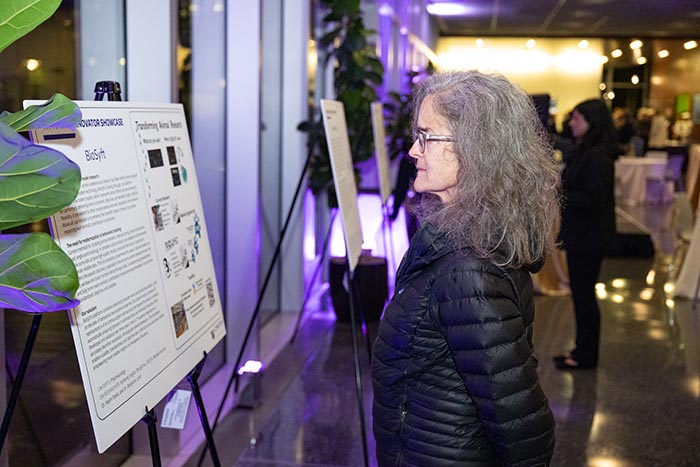
BioSyft – advancing animal research with computer vision
Postdoctoral researcher Anthony English (Pharmacology) presented BioSyft, a platform that modernizes behavioral tracking in animal model research using advanced computer vision and predictive analytics. Designed to eliminate bias and boost consistency, BioSyft delivers detailed, scalable insights across rodent studies—supporting more reliable therapeutic discovery, especially in neuroscience. The project was developed in collaboration with Dr. Michael Bruchas, Dr. Nephi Stella, and Dr. Benjamin Land. English is currently participating in CoMotion’s Postdoctoral Entrepreneurship Program (PEP).
GlucoScreen – smartphone-based diagnostics for chronic disease
Postdoctoral researcher Jason Hoffman (Paul G. Allen School of Computer Science & Engineering) presented GlucoScreen, a low-cost diagnostic platform that transforms smartphones into handheld readers for chronic disease biomarkers, beginning with prediabetes. The prototype uses capacitive touch signals to interpret results from standard electrochemical test strips—no specialized hardware required. Developed in collaboration with Anandghan Waghmare, Farshid Salemi Parizi, Yuntao Wang, Matthew Thompson, and Shwetak Patel, the project brings together expertise from the Allen School, Electrical & Computer Engineering, and Family Medicine. Hoffman is also a participant in CoMotion’s Postdoctoral Entrepreneurship Program.
IV-Safe – color-changing patch for early IV failure detection
Surbhi Kakar (Pediatrics) presented IV-Safe, a low-cost, non-electronic patch that helps nurses detect early signs of IV failure—such as swelling or leakage—before they lead to serious complications like tissue damage or limb loss. The sensor-integrated patch changes color in response to strain or moisture, providing a visual alert that’s especially valuable for vulnerable populations such as infants and in low-resource clinical settings. Developed by a multidisciplinary team including Gregory Valentine, Lorenzo Guio, Cameron Renteria, Wren Kitchings, Hesham Katabi, Aditya Goparaju, and Sophie De Mello e Souza, the technology has undergone preclinical testing, with a patent filed and regulatory path identified. Guio is a postdoctoral researcher and alumnus of CoMotion’s Postdoctoral Entrepreneurship Program.
DeNovoAgonists – next-generation protein therapeutics for regeneration and repair
Ashish Phal (Biochemistry) presented DeNovoAgonists, a platform for designing de novo protein agonists to replace native growth factors used in regenerative and metabolic therapies. These custom-designed molecules stabilize specific receptor states while avoiding the short half-lives and off-target effects that limit the efficacy of current biologics. The platform has produced three lead programs focused on wound healing, painless neurotrophin therapy, and skeletal repair, with broader potential across major RTK pathways. The project was developed with Preetham Venkatesh, David Lee, Clara McCurdy, Dr. David Baker, and Dr. Hannele Ruohola-Baker, and is expected to spin out from the Institute for Protein Design. Phal recently completed CoMotion’s Plan to Launch program.
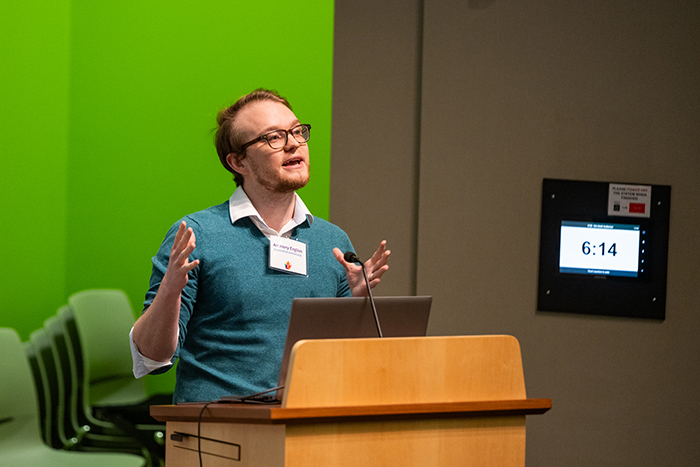
Anthony English, Pharmacology, BioSyft
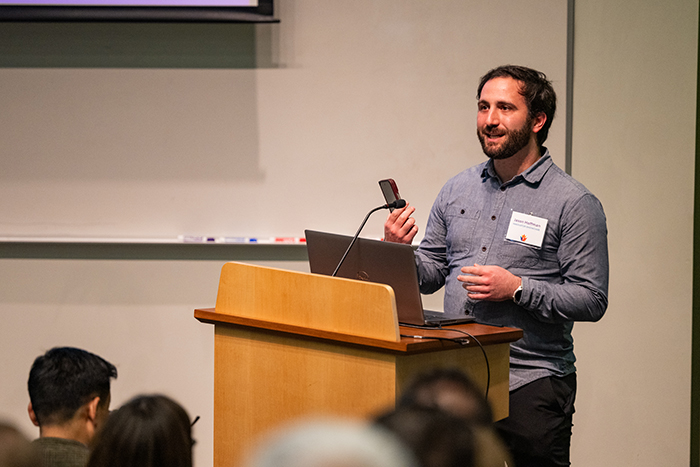
Jason Hoffman, Paul G. Allen School of Computer Science & Engineering, GlucoScreen,
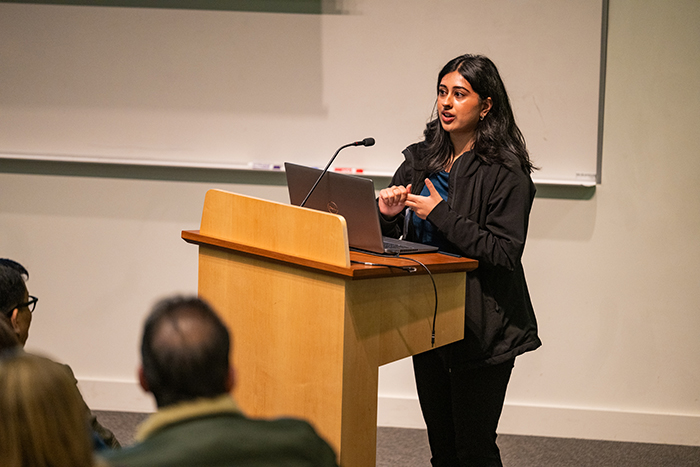
Surbhi Kakar, Pediatrics, IV-Safe,
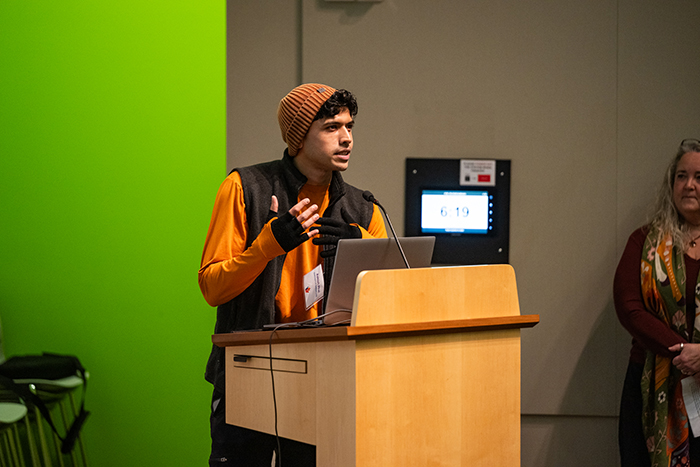
Ashish Phal, Biochemistry, DeNovoAgonists
If you’d like to be among a future CoMotion Innovator Showcase cohort, the first step is to start working with CoMotion.
More photo highlights
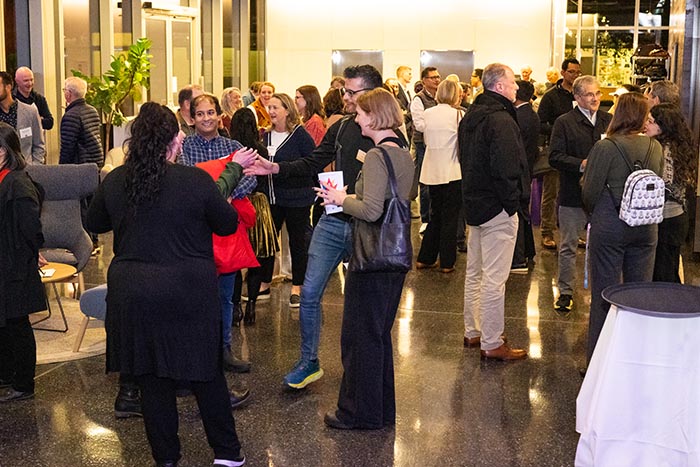
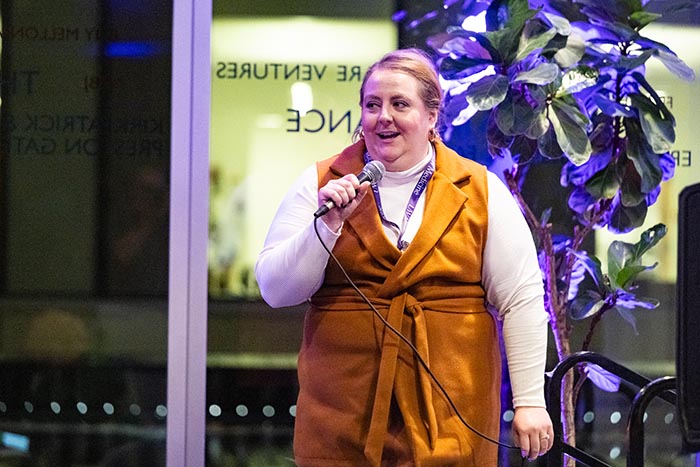
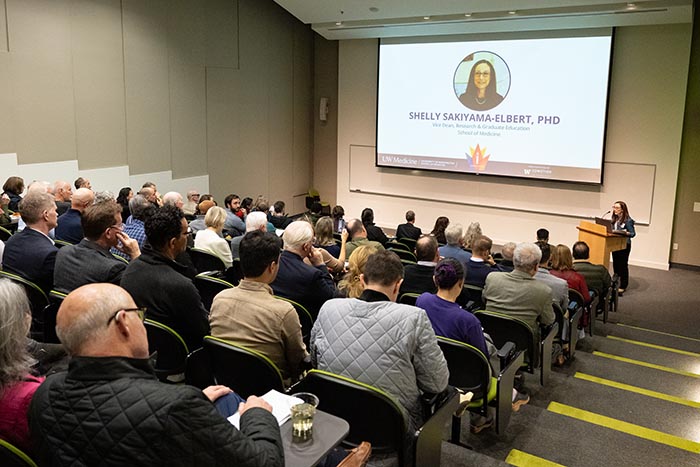
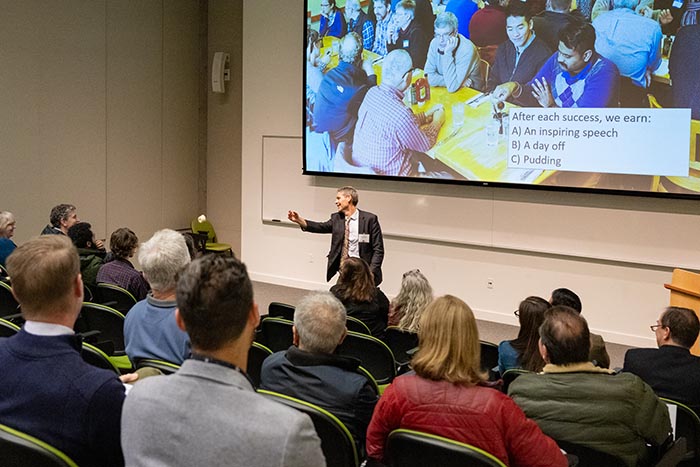
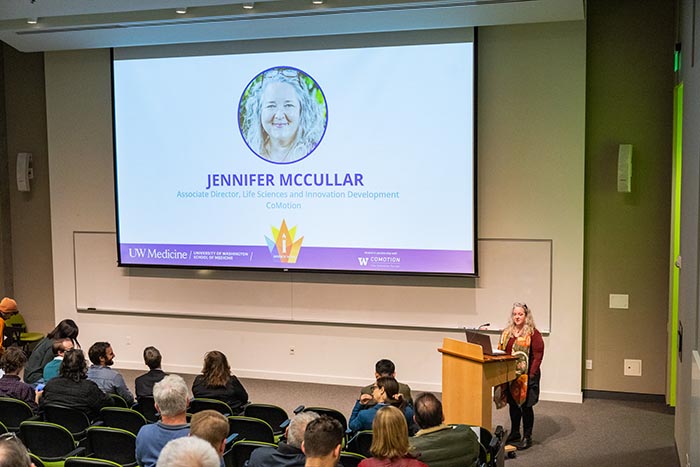
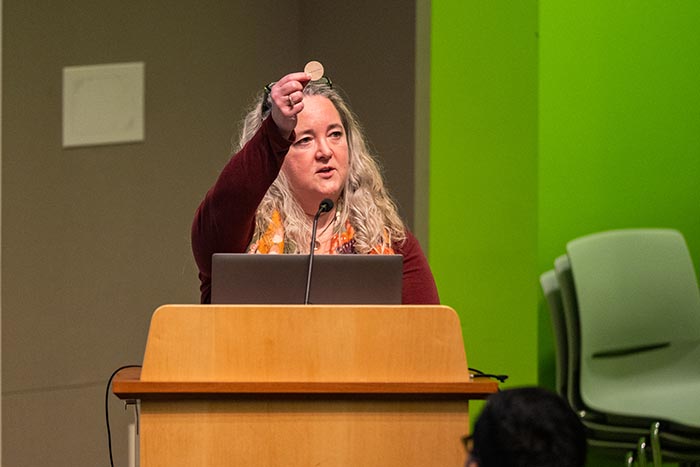
The 2025 Innovator of the Year and CoMotion Innovator Showcase was a celebration of the people and ideas shaping UW innovation. Take a look at some photo highlights from this inspiring event.